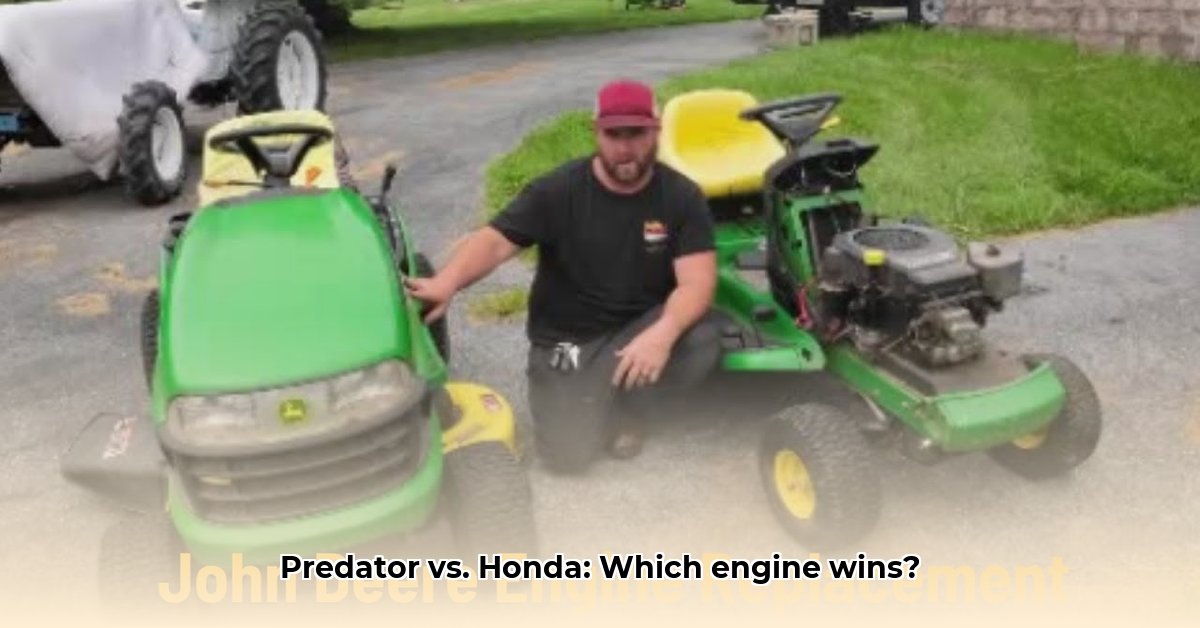
Replacing your lawn tractor's engine is a significant undertaking, but a rewarding DIY project for those comfortable with basic mechanics. This guide compares the cost-effective Predator engine from Harbor Freight against established brands like Honda, exploring the trade-offs and providing a step-by-step replacement guide. This will help you determine the best approach for your budget and skills. For more information on Honda engines, see Honda engines.
Choosing the Right Replacement Engine: Predator vs. Honda vs. Briggs & Stratton
A failing lawn tractor engine presents a crucial decision: prioritize cost savings with a Predator engine, or opt for established reliability with Honda or Briggs & Stratton? Both approaches offer valid advantages, but a thorough comparison is essential.
Honda and Briggs & Stratton engines boast reputations for reliability and longevity. They're known for dependable performance and extended lifespans, attributes reflecting in their higher price tags. Think of them as the premium brands: higher upfront cost, but potentially years of trouble-free operation.
Predator engines, manufactured by Harbor Freight, contrast sharply. Their significantly lower initial cost makes them a tempting alternative for budget-conscious homeowners. However, this affordability often comes with trade-offs, including potentially shorter lifespans and less readily available support resources. The Predator engine could be considered the budget-friendly option; cheaper upfront but potentially requiring more maintenance over time.
A direct, scientifically rigorous comparison of long-term durability between these engine brands is difficult due to limited large-scale, independent testing data and varied usage conditions. While numerous online reviews are helpful, they lack the comprehensive data needed for definitive conclusions. Our comparison here relies on generally available specifications and industry consensus, acknowledging inherent limitations in comparing long-term reliability across these brands.
| Feature | Honda GXV160 (Example) | Briggs & Stratton 160cc (Example) | Predator 212cc (Example) | Considerations |
|---|---|---|---|---|
| Displacement (cc) | 160 | 160 | 212 | Higher displacement doesn't always equate to more power. |
| Approximate Price (USD) | $300 - $500 | $250 - $450 | $150 - $250 | Consider total cost of ownership over the engine's lifespan. |
| Warranty (Years) | Typically 2-3 | Typically 2-3 | Typically 1-2 | Warranty terms and conditions vary by model and retailer. |
| Parts Availability | Excellent | Good | Fair | Impacts repair costs and downtime. |
| Repair Support | Extensive dealer network | Good dealer and online support | Limited; often reliant on online resources | Accessibility of qualified mechanics varies by region. |
Note: This table provides general comparisons. Always consult the manufacturer’s website for exact specifications and current pricing for the specific engine models under consideration. Engine specifications and pricing are subject to change.
Isn't it interesting how drastically the price points differ? This price gap is a major factor to consider when deciding which engine is right for you.
Replacing Your Lawn Tractor Engine: A Step-by-Step Guide
Replacing a lawn tractor engine is an intermediate-level DIY project. While doable for mechanically inclined individuals, it demands patience, attention to detail, and a firm commitment to safety. If you're uncomfortable with this level of mechanical work, it's best to consult a qualified mechanic.
Safety First! Always disconnect the battery and the spark plug before starting any work on your lawn tractor. Wear appropriate safety glasses and gloves.
Step 1: Preparation – Gathering the Necessary Tools and Materials
Tools: Socket set (metric and standard), wrenches, screwdrivers (Phillips and flathead), an engine hoist (highly recommended), and the lawn tractor's service manual. Your service manual provides critical model-specific information, making it invaluable for efficient and effective repairs.
Materials: New engine oil (correct type and weight), new fuel, new gaskets or seals (as needed), and any required replacement fluids.
Service Manual: Before you begin, read and understand the relevant sections in your lawn tractor's service manual. This will prevent costly errors and time-consuming revisions.
Step 2: Removing the Old Engine
Carefully disconnect all components attached to the engine: fuel lines, oil lines, throttle cables, and the wiring harness. Take detailed photographs or create precise notes; this documentation is indispensable for reassembly.
Using the engine hoist, carefully lift the engine out of the tractor's chassis. The service manual will detail the specific steps for your model, including removing and replacing engine mounts.
Step 3: Installing the New Engine
Gently position the new engine, ensuring perfect alignment with the mounting points. Refer to your service manual for precise alignment instructions.
Securely bolt the engine to the frame, adhering to the torque specifications outlined in the service manual. Over-tightening can strip bolts, while under-tightening can lead to a loose engine.
Step 4: Reconnecting Components
Reconnect the fuel and oil lines, ensuring secure, leak-free connections. Double-check all connections before starting the engine.
Reconnect the throttle cable, wiring harness, and any other previously disconnected components. Again, consult your service manual frequently.
Step 5: Testing and Troubleshooting
Reconnect the spark plug.
Attempt to start the engine. If it fails to start, systematically check the fuel delivery system, ignition system, and oil level. The service manual includes detailed troubleshooting guides for addressing common issues.
Do you have any questions about this process? Many online resources and forums provide additional support if you encounter unexpected challenges during the replacement process.
Post-Installation Maintenance: Extending Engine Lifespan
Regular maintenance is paramount, regardless of the engine brand, for maximizing lifespan and minimizing future problems.
Oil Changes: Adhere to the manufacturer's recommended oil change schedule, using the precisely specified oil type and weight.
Air Filter: Regularly inspect and change the air filter as needed. A clogged filter restricts airflow, decreasing engine performance and potentially causing engine damage.
Spark Plug: Regularly inspect and replace the spark plug as recommended by the manufacturer. A worn plug significantly diminishes ignition efficiency.
Blade Sharpening: Regular sharpening of your mower blades is important. Dull blades significantly increase the engine load, causing it to work harder than necessary.
The Verdict: Honda, Briggs & Stratton, or Predator?
The optimal choice depends entirely on your individual circumstances and priorities. Honda and Briggs & Stratton engines generally offer superior reliability and longer lifespans, but incur a significantly higher upfront cost. Predator engines offer substantial initial cost savings, but might require more maintenance and potentially necessitate earlier replacement. The cost-benefit analysis is crucial, requiring a consideration of your budget, mechanical skills, and risk tolerance. There's no singular "best" answer; choose the option that best aligns with your specific needs.